
When attempting to connect to Mel2web for the first time from a new workstation or after a reassignment, the authentication page can be confusing. The portal address varies by ministry, the credentials are not always what one expects, and recently, an additional verification step has been added to the process. Here’s how to navigate it effectively to access the Mel2web academic messaging without wasting time.
Two-factor authentication on Mel2web: what changes at login
Old tutorials describe a simple access method using a username and password. This is no longer entirely accurate. Since 2024-2025, two-factor authentication is being gradually enforced on ministerial portals, particularly for remote work and certain sensitive profiles.
Specifically, after entering your usual credentials, the system requests a temporary code (OTP) sent via SMS or generated by an authentication app on your phone. This phone enrollment step needs to be done only once, but it can block you if not anticipated.
Before your first connection, it is recommended to prepare three items:
- Your academic username (usually first.last, sometimes with a number in case of duplicates) and the temporary password provided by your managing service
- A mobile phone on which to install a compatible authentication app (FreeOTP, Microsoft Authenticator, or Google Authenticator depending on the academies)
- The recovery codes provided during enrollment, to be kept outside of the messaging system itself, for example in printed form
If you are using a shared workstation or a computer without regular access, the recovery codes become your only safety net in case of losing your phone. Do not skip this step.
For a detailed presentation of the complete procedure, you can access mel2web via Geeks and The City where each screen is described step by step.
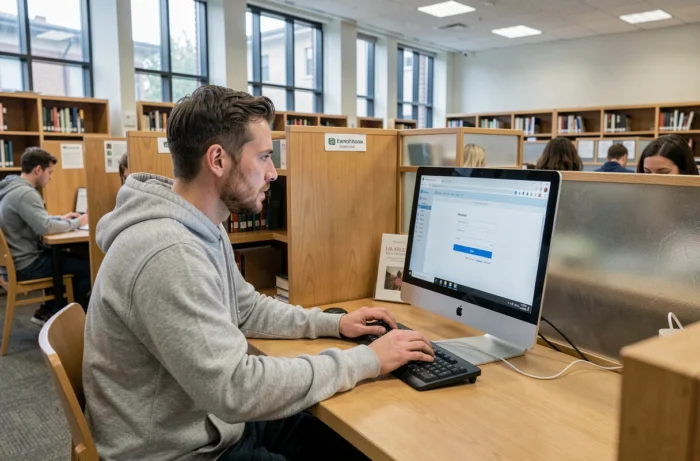
National portal or academic webmail: which URL to use for Mel2web
A common point of confusion is that there are several addresses depending on the academies. Existing content mentions local URLs (like courrier.ac-bordeaux.fr, webmel.ac-nancy-metz.fr), but a migration is underway towards a unified national portal.
The Ministry of National Education is gradually centralizing access via messagerie.education.gouv.fr. Some academies have already switched, while others still maintain their old webmail in parallel. Feedback on this point varies: in some academies, both addresses coexist temporarily and redirect to the same service, while others have disabled the old portal.
Identifying the correct URL for your academy
The most reliable way is to go through your academy’s official website (ac-[city].fr) and look for the “quick access” or “professional messaging” section. If the local address returns an error, try the national portal directly. The username and password remain the same regardless of the entry point.
For personnel under the Ministry of Agriculture, the Mél messaging (Melanie2web) uses a distinct infrastructure. The portal is accessible via mel.din.developpement-durable.gouv.fr for certain ministries, or through the Chlorofil portal for agricultural education. Do not confuse the two systems: the credentials are not interchangeable.
Setting up Mel2web on mobile and email client
Accessing Mel2web solely through the browser works, but most agents eventually want to receive their messages on their phone or in software like Thunderbird. The setup relies on IMAP and SMTP protocols, with parameters specific to each ministry.
IMAP and SMTP connection settings
The incoming and outgoing servers differ depending on your administration. For National Education, the IMAP server is generally in the form imap.ac-[academy].fr on port 993 with SSL. The SMTP server follows the same logic on port 465 or 587.
Always use SSL/TLS encryption when configuring. An unencrypted setup exposes your credentials over the network, which poses a real cybersecurity issue, especially on Wi-Fi connections outside the institution.
- On iPhone, go to Settings > Mail > Accounts > Add Account > Other, then enter the IMAP and SMTP servers with the SSL ports
- On Android, the Gmail app or any compatible IMAP client accepts these settings in the “Add a professional account” section
- On Thunderbird, automatic detection sometimes works, but it is safer to manually enter the servers to avoid incorrect configuration
If the connection fails after seemingly correct setup, the problem often lies with the password. Some academic portals require a distinct application password from the main password when two-factor authentication is active. This password is generated from the web interface of the messaging system, in the account security settings.
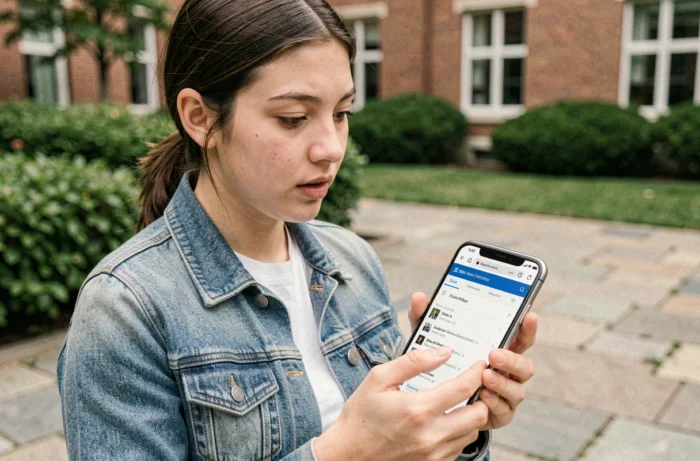
Common connection issues with academic messaging
The most common blockage after a reassignment is an account that is not yet active. Academic messaging addresses are created from personnel management databases, and the update can take a few days after the effective start date.
Another classic situation: the temporary password has expired before the first connection. In this case, the reset form accessible from the login page allows you to generate a new password, provided you have previously entered a backup email address or phone number.
If you encounter persistent blockage, contact your academy’s IT support service (often referred to as “DSI support” or “digital single window”). Response times vary, but using the internal ticket form is more effective than a phone call during the back-to-school period.
The transition to two-factor authentication and the migration to a unified portal ultimately simplify access, but create a transition period where habits change. Keeping your recovery codes handy and checking the login URL before each new school year remain the two most useful reflexes to avoid getting stuck in front of your Mel2web messaging.