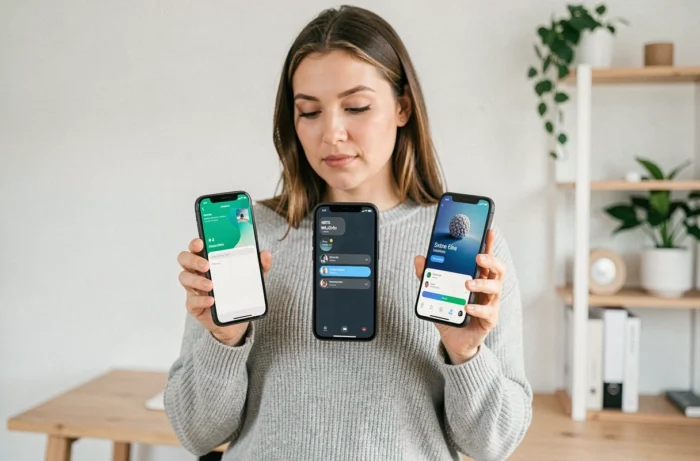
The smartphone market in October 2026 is structured around a few flagship models from Samsung, Apple, Google, and Xiaomi, while Oppo and OnePlus are competing for positions in the premium segment. At the same time, European regulations now require a visible repairability index at the point of purchase and software support obligations for several years. These two dynamics, technological and regulatory, are reshaping the criteria for those looking to buy a phone today.
Repairability and software lifespan: decisive criteria at the time of purchase
Most buying guides rank smartphones by performance, photography, or battery life. Few integrate repairability as a top criterion, even though the European Union has made dedicated labeling mandatory on devices sold in its member states.
Manufacturers must make certain spare parts available for an extended period and provide operating system updates for at least five years after the last unit of a model is released. This guaranteed minimum changes the game: a smartphone purchased in 2026 should remain functional and secure until at least 2031.
Reports published by heise in October 2026 nuance this picture. Many models recently launched in the EU are said to be poorly labeled or lacking mandatory information. Before relying on a label, it remains wise to consult the manufacturer’s technical sheet and the results published on specialized sites like smartphone-test.fr, which detail the testing protocols applied to each model.
Samsung Galaxy S26 Ultra and iPhone 18 Pro: what really separates them
These two references consistently top the rankings. The Galaxy S26 Ultra and the iPhone 18 Pro compete for the top spot according to various sites, with scores falling within the same high range. However, the reasons for choosing one over the other do not hinge on the overall score.
Android ecosystem vs. iOS
Choosing a smartphone is primarily about choosing an ecosystem. Only iPhones run on iOS, which implies deep integration with Macs, iPads, and Apple Watches. Android, represented by the Galaxy S26 Ultra, offers more customization and broader compatibility with third-party accessories.
Switching from one ecosystem to another remains cumbersome: data transfer, repurchasing apps, and losing certain features related to cloud services. This migration cost often weighs more heavily than the technical specifications in the final decision.
Photography and daily battery life
Samsung emphasizes optical versatility with a high-magnification telephoto lens. Apple focuses on software processing and color consistency across its sensors. Both approaches produce excellent images, but in different registers: the Galaxy S26 Ultra favors distant scenes, while the iPhone 18 Pro tends to handle low-light portraits better.
Battery life is less of a differentiator between these two models than before. Both comfortably last a full day of mixed use. The difference comes down to charging speed and energy management in standby, criteria that are rarely decisive for standard use.
Google Pixel and the bet on software intelligence
Google approaches smartphone photography differently. While Samsung and Apple stack sensors, the Pixel relies on advanced algorithmic processing to compensate for more modest optical hardware. Night photography and HDR results remain among the best on the market, sometimes outpacing competitors with larger sensors.
The Pixel also benefits from a structural advantage: Android updates arrive first on Google devices. For those who value security and new software features, this is a concrete argument.
The known limitation of the Pixel concerns the raw power of the Tensor processor compared to the chips of its direct competitors. For web browsing and common applications, the difference is imperceptible. It becomes measurable in demanding games and local video editing.
Smartphones under 300 euros: where the acceptable compromise begins
The Xiaomi Redmi Note 15 5G frequently appears in most selections as the reference under the 300 euro mark. Xiaomi compresses its margins to offer a quality display, 5G compatibility, and generous battery life at a price that represents a fraction of a high-end model.
The compromises lie on three specific axes:
- Photo quality in difficult conditions (low light, zoom) remains significantly behind premium models, despite sensors with high advertised resolutions
- The duration of software support varies by manufacturer, and Xiaomi has not always guaranteed the same number of years of updates as Samsung or Google on its entry-level models
- Construction materials (plastic, less durable glass) influence the physical durability of the device over the long term
A well-chosen smartphone at 250 euros meets the needs of the majority of users. The question is not whether it is “worse” than a 1,200 euro model, but whether the sacrificed functions correspond to uses you actually engage in.
Refurbished and repair: the parallel market that influences choice
The European directive on the right to repair adds a dimension after purchase. Consumers can now demand the repair of a device under warranty rather than its replacement, which mechanically extends the lifespan of phones in circulation.
The refurbished market benefits from this dynamic. Buying a refurbished previous-generation model allows access to a high-end smartphone for a budget comparable to that of a new mid-range device. Refurbishment represents a credible alternative to new, provided that the warranty offered by the seller and the condition of the battery are checked.
The choice of the best smartphone in 2026 depends less on raw technical specifications than on the trade-off between ecosystem, guaranteed software lifespan, and actual budget. Incorporating the potential repair costs and resale value into the calculation allows for comparing models based on their total cost of ownership rather than just their purchase price.