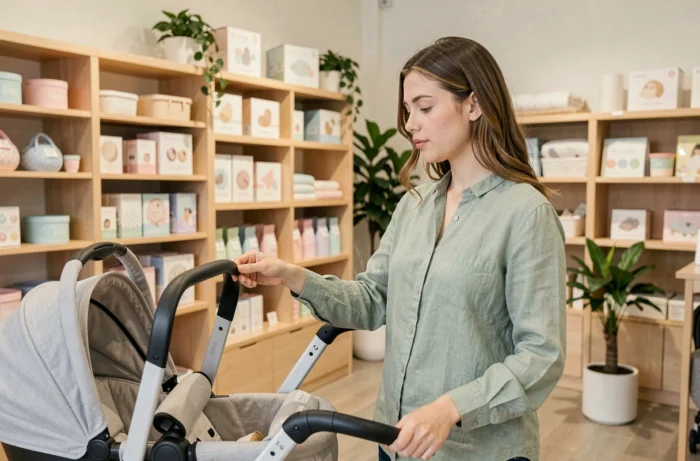
A parent pushing a stroller in a baby goods store in 2026 no longer looks at the same labels as two years ago. Mentions of traceability are multiplying, materials are changing names, and some products disappear from online shelves overnight. Behind these changes, a new European regulation is reshaping the rules of the game for manufacturers, distributors, and marketplaces.
GPSR Regulation and Baby Products: What Changes in Store
The Regulation (EU) 2023/988 on general product safety, known as GPSR, has been applicable throughout the European Union since December 13, 2024. It replaces the old directive 2001/95/EC and covers almost all non-food products intended for consumers, including baby products: strollers, car seats, bouncers, high chairs, night lights, and small furniture.
The most visible consequence for parents concerns the labeling and traceability of products. Each item must now clearly identify the manufacturer, importer, and distributor. Instructions become more detailed, and recall processes go through platforms like Safety Business Gateway at the European level or RappelConso in France.
For brands, the stakes are direct: without compliance, their listings can be blocked on marketplaces. Regularly, Lol Baby news relays these regulatory developments and their effects on available catalogs. Small artisanal baby brands are the most exposed, as they do not always have the resources to quickly adapt their technical documentation.
Compact Strollers and Car Seats: Changing Selection Criteria
The ultra-compact stroller segment continues to focus on launches. Brands compete on weight, folded size, and compatibility with car seats from the same manufacturer. A clear trend is observed: the modular system that follows the child’s growth from birth to sitting position, sometimes beyond.
Comfort remains a central argument, but parents also consider one-handed folding ease, chassis width (to fit through elevator doors), and suspension quality on damaged sidewalks. On this last point, feedback varies depending on models and floor coverings.
What Distinguishes the 2025-2026 Innovations
- Recycled polyester fabrics certified Oeko-Tex, gradually replacing traditional coverings on seats and stroller canopies
- Multiple positions (rest, play, sleep) adjustable without tools, including on bouncers that attach to the chassis
- Expanded compatibility between brands for car seat adapters, reducing the number of accessories to buy separately
On the car seat side, the i-Size standard (R129) has become widespread. New models incorporate reinforced side protections and more readable harness tension indicators. 360-degree seat rotation is becoming standard in mid-range models, not just in high-end ones.
Eco-Friendly Baby Products: Beyond the Label, Concrete Choices
Durability is no longer just a logo on the packaging. Parents buying in 2026 check the composition of materials, the origin of manufacturing, and the possibility of reselling or recycling the product. The second-hand market for baby products has gained significant traction, driven by specialized platforms and local resale groups.
Modern cloth diapers have become more practical thanks to snap systems and interchangeable inserts. They no longer resemble the bulky models from ten years ago. The main hurdle remains the washing and drying time, but feedback from regular users shows that a routine settles in after a few weeks.
Durable Bedroom Furniture and Accessories
Transformable beds made of FSC-certified wood are multiplying in catalogs. The principle is simple: the same piece of furniture accompanies the child from crib to junior bed, sometimes even to a desk. Budget savings are achieved over time, provided the sturdiness of the fittings and the quality of the finishes are checked.
Everyday accessories follow the same logic. Silicone meal sets are gradually replacing rigid plastic. Brands offer ranges of glass baby bottles with silicone protection, heavier but healthier and recyclable.

Connected Baby Products: Sleep Monitors and Smart Scales
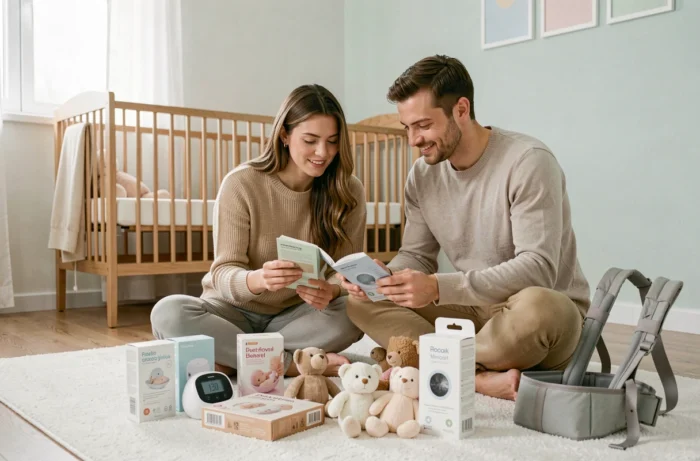
Sleep monitors have evolved far beyond simple video baby monitors. Recent models track the infant’s heart rate and oxygen saturation, with alerts sent to parents’ phones. These devices reduce anxiety related to the risk of sudden infant death syndrome, although it is emphasized that they do not replace medical sleep recommendations.
Connected baby scales allow for precise growth tracking, with automatic synchronization to an app. For breastfeeding parents, tracking weight before and after feeding provides an estimate of the amount ingested. These tools remain complementary to traditional pediatric follow-up.
- Textiles for wearable sensors (socks, headbands) use hypoallergenic materials suitable for newborns’ sensitive skin
- Battery life has improved, with models lasting several nights without recharging
- Data remains stored locally on some devices, an argument for parents concerned about their child’s health data privacy
The baby products market in 2026 is structured around two axes: regulatory compliance, which pushes manufacturers for greater transparency, and parental demand for durable, modular, and technically reliable products. The coming months will likely see the arrival of new European standards on toys and chemical substances, which will continue to reshape the available offerings in stores and online.