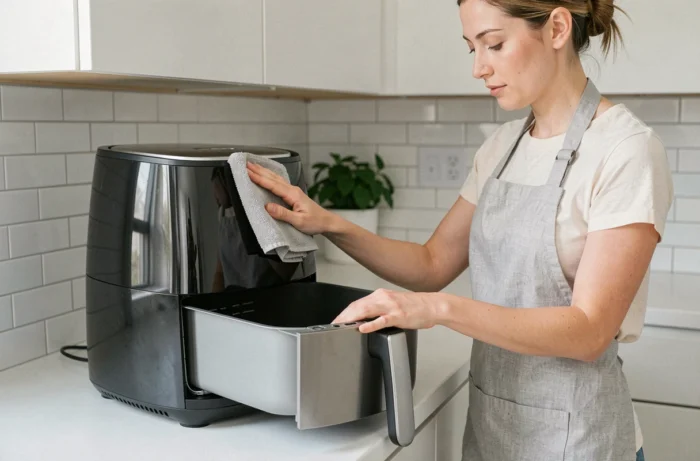
Choosing a fryer in 2024 often involves balancing cooking quality and cleaning hassle. Manufacturers compete with systems to simplify maintenance: removable bowls, non-stick coatings, automatic oil filtration. However, not all devices are created equal, and the ease of cleaning depends on technical criteria that are rarely compared in the same table.
Interior Coatings and European Regulation on BPA: What Changes for Cleaning
The ease of cleaning a fryer largely depends on its interior coating. A well-designed non-stick bowl can be degreased in a few minutes, while a raw steel bowl requires prolonged soaking and more aggressive scrubbing.
One element that goes under the radar of most comparisons is the regulation (EU) 2024/3190, which gradually bans bisphenol A in materials that come into contact with food. The ban will be implemented in stages between 2026 and 2029 depending on product categories. The interior varnishes of metal bowls and non-stick coatings are directly affected.
For consumers, this means that coating formulations will evolve in the coming years. A model purchased in 2024 with a conventional coating could become outdated with the new standards. Prioritizing a fryer with a dishwasher-safe bowl and made without BPA is a more sustainable choice, both in terms of health and daily maintenance.
To identify the best easy-to-clean fryers on the current market, it is necessary to cross-reference the type of coating, dishwasher compatibility, and compliance with recent regulatory requirements.
Comparison Table: Fryers Easy to Clean in 2024
The table below compares cleaning-related features for several models frequently mentioned in buying guides. The selected data focuses on the type of bowl, its removability, dishwasher compatibility, and the presence of an oil filtration system.
| Model | Type | Removable Bowl | Dishwasher Compatible | Oil Filtration |
|---|---|---|---|---|
| Tefal Oleo Clean | Oil bath | Yes | Yes (bowl and basket) | Yes (automatic) |
| Moulinex Super Uno | Oil bath | Yes | Yes | No |
| Ninja Foodi Dual Zone | Hot air (oil-free) | Yes (drawers) | Yes | Not applicable |
| Philips Air Fryer Series 2000 | Hot air (oil-free) | Yes | Yes | Not applicable |
| Bestron AF357B | Oil bath | Yes | Yes (basket) | No |
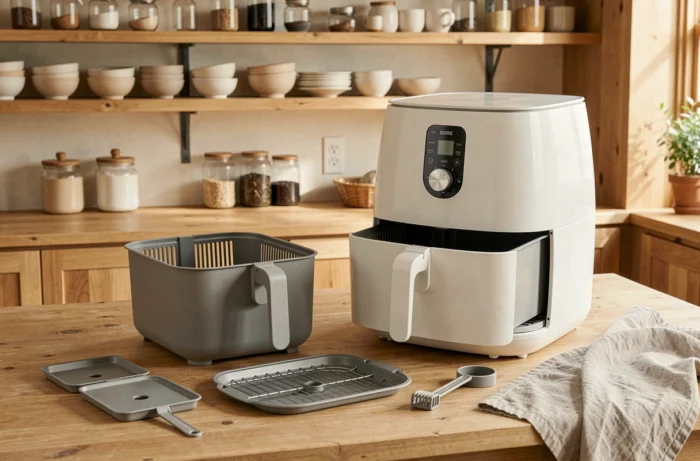
Two discrepancies stand out clearly. The first concerns automatic oil filtration, which is only present on the Tefal Oleo Clean among the listed models. The second relates to the nature of the cleaning itself: hot air fryers eliminate the issue of used oil, drastically reducing maintenance time.
Oil Fryer or Hot Air Fryer: The Real Difference in Maintenance
The distinction between oil bath fryers and hot air fryers is not just about the amount of fat used. It also determines the nature of the residues to be cleaned, and thus the time spent after each use.
An oil bath fryer generates three types of mess: the oil itself (draining, storage, replacement), frying residues at the bottom of the bowl, and greasy splashes on the lid and filter. Even with a removable bowl and a trip through the dishwasher, managing used oil remains the main constraint.
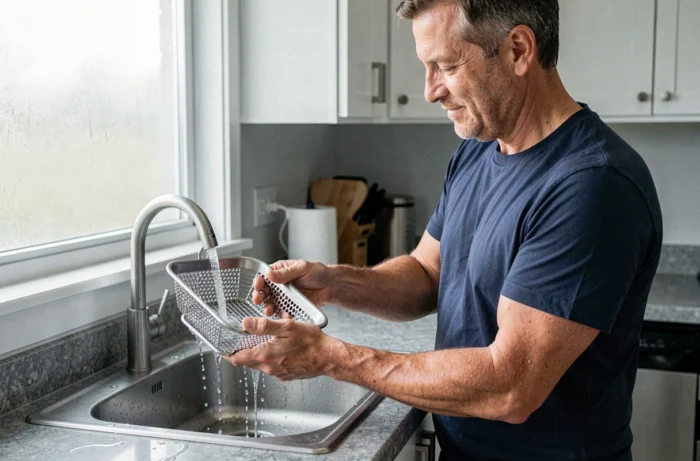
In contrast, a hot air fryer produces only dry or slightly greasy residues. The basket and drawer can be rinsed under hot water or go directly into the dishwasher. Cleaning takes just a few minutes, without handling hot liquid or storing oil.
- Oil bath fryers with filtration (like the Tefal Oleo Clean) reduce the frequency of oil changes but do not eliminate periodic draining
- Hot air fryers eliminate any handling of oil, which divides maintenance time compared to a conventional model
- Non-removable bowls (rare in 2024, but still present on some entry-level models) complicate cleaning significantly, as oil must be soaked up directly in the appliance
Oil Oxidation and Cleaning: An Underestimated Link
Neglected maintenance is not limited to visual or olfactory discomfort. Residues of oxidized oil in a poorly cleaned bowl accelerate the rancidity of the fresh oil added afterward. Recent cases of product recalls in France have documented issues of early rancidity related to the oxidation of frying oil, particularly in industrial food products.
For home use, the logic is the same. A bowl where deposits of oxidized oil persist between uses degrades fresh oil more quickly. The taste deteriorates, and potentially harmful compounds form.
Thorough cleaning after each use thus protects both the taste quality of the fries and the lifespan of the oil. Fryers with removable bowls that can be fully washed in the dishwasher offer a concrete advantage here: no corner of the bowl escapes cleaning, unlike manual wiping in a closed appliance.
Selection Criteria for an Easy-to-Clean Fryer
Three technical criteria allow for distinguishing models based on ease of maintenance:
- The complete removability of the bowl and basket, allowing for a dishwasher cycle without risk to the appliance’s electronics
- The type of interior coating (preferably non-stick and BPA-free), which determines resistance to cooked grease deposits and the longevity of easy cleaning
- The presence or absence of an oil filtration system, which reduces the frequency of draining and limits the accumulation of charred residues at the bottom of the bowl
Hot air fryers naturally meet the first two criteria. For oil bath fryers, the Tefal Oleo Clean remains the model that best combines all three.
The final choice depends on the type of cooking desired. A hot air fryer will always be easier to maintain, but it does not exactly replicate the crispiness of a traditional oil bath frying. The issue of cleaning should not be the only criterion, but in 2024, it is the one that most clearly separates the models from each other.