
The ideal weight for a woman measuring 1.62m cannot be reduced to a single number. Several formulas coexist, each incorporating different variables: age, body shape, bone structure. The results can sometimes differ by several kilograms depending on the method used. Comparing these approaches allows for a better understanding of the realistic range for this specific height.
Compared results of calculation formulas for 1.62m
The most commonly used formulas to estimate the ideal weight of a woman produce noticeably different results. The table below summarizes the values obtained for a woman of 1.62m, according to four classic methods.
You may also like : Tips and Tricks for Finding the Ideal Job in Marseille in 2024
| Formula | Variables considered | Estimated result |
|---|---|---|
| BMI (normal range) | Height only | 48.6 kg to 65.6 kg |
| Lorentz (woman) | Height + sex | About 56 kg |
| Creff (normal morphology) | Height + age + body shape | Variable by age |
| Monnerot-Dumaine | Height + wrist circumference | Variable by bone structure |
The gap between the lower limit of the BMI and the Lorentz result exceeds several kilograms. This discrepancy illustrates how the choice of formula influences the weight target.
To delve deeper into this issue, the method described for the ideal weight for women 1.62m according to Else Revue details the adjustments related to individual morphology.
Related reading : How to Choose the Ideal Crib Size: Advantages and Disadvantages to Know
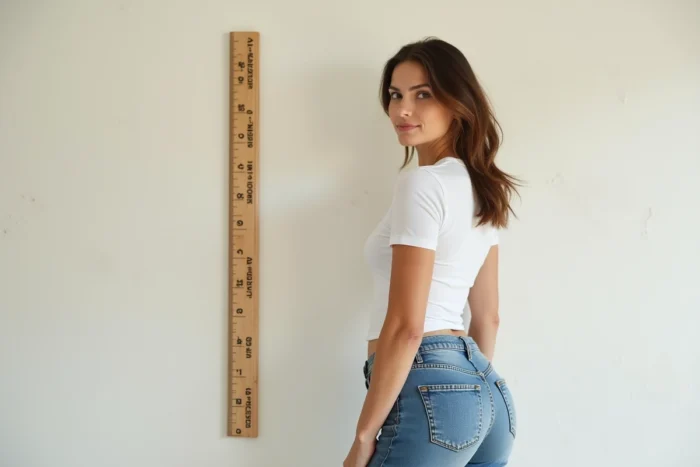
Wrist circumference and bone structure: the criterion that changes the weight range
Most articles on ideal weight rely solely on height and sex. Recent recommendations from clinical calculators incorporate an additional parameter: wrist circumference to deduce bone type.
There are three categories of bone morphology:
- Fine bone structure (asthenic): wrist circumference below average for height, which leads to the lower part of the healthy weight range
- Average bone structure (normosthenic): most women fall here, with a target weight close to standard Lorentz or Creff results
- Large bone structure (hypersthenic): higher wrist circumference, which justifies a weight target in the upper part of the BMI range
For a woman of 1.62m, the difference between fine and large bone structure can represent several kilograms on the target weight. Two women of the same height can have very different ideal weights simply due to their bone structure.
This measurable criterion remains underutilized in mainstream content. However, it provides greater accuracy than formulas that only consider height.
Age-adjusted BMI: why the target evolves after 45
The standard body mass index defines the “normal” range between 18.5 and 24.9 for all adults. Current recommendations, adopted by HAS and WHO, nuance this grid according to age.
After 45, body composition changes: muscle mass decreases while fat mass tends to increase, even at stable weight. A BMI slightly above 25 does not have the same medical significance at 30 as it does at 55.
For a woman of 1.62m, this means that the weight range compatible with good health widens with age. Aiming for a weight at the lower end of the BMI range at 55 is not always relevant and may even lead to a detrimental loss of muscle mass.
Muscle mass and metabolism over the years
The distribution between muscle mass and fat mass weighs more than the number displayed on the scale. A woman of 1.62m weighing 60 kg with good muscle mass has a more favorable metabolic profile than a woman of the same weight with little muscle.
BMI alone does not capture this distinction. That is why recent approaches recommend coupling weight calculation with an assessment of body composition, particularly through waist circumference or bioelectrical impedance analysis.

Weight range rather than fixed number: the realistic goal approach
Recent clinical calculators favor a delta approach: they suggest a weight loss or stabilization goal of between 5 and 10% of the current weight, rather than an absolute target number. This method reduces the risks associated with overly restrictive diets and promotes sustainable maintenance.
For a woman of 1.62m wishing to adjust her weight, the parameters to consider are as follows:
- Her BMI range for 1.62m (which covers a wide amplitude)
- Her bone structure type, measured via wrist circumference
- Her age, which modifies the relevant BMI target
- Her actual body composition (muscle mass versus fat mass)
No single formula provides a universal ideal weight for 1.62m. Each method offers partial insight. The convergence of several indicators, rather than an isolated result, provides a more reliable estimate.
The number on the scale remains a reference among others. Waist circumference, weight stability over several months, and the absence of associated metabolic risk are more telling health markers than a number of kilograms.
For a woman of 1.62m, the most solid approach is to position her weight within a range consistent with her morphology and age, and then to evaluate her overall health indicators rather than aiming for a precise number.