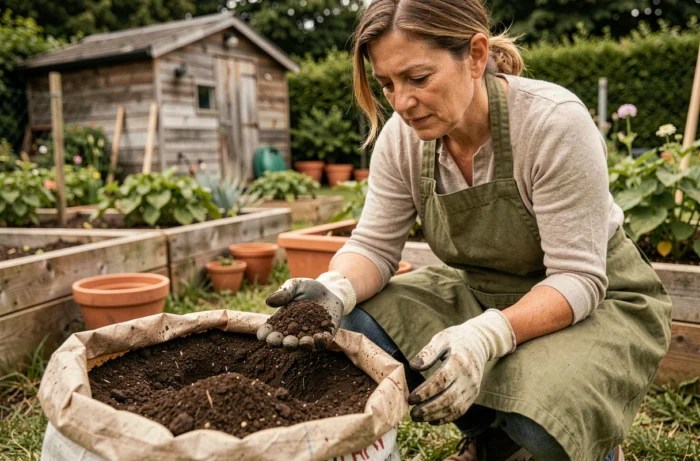
A filled land after construction, a vegetable garden that has stagnated for two seasons, a sparse lawn on compact soil: in each of these cases, the topsoil that is brought in makes the difference between a project that succeeds and a site that needs to be redone. However, it is essential to know what you are actually buying, because the term “topsoil” covers very uneven products.
AFNOR Standard and Actual Composition: What the Label of Topsoil Hides
The AFNOR standard NF U44-551 has framed the definition of topsoil since its update in 2009. It describes soil derived from humiferous surface horizons or deep layers, which may be mixed with organic materials of plant origin, organic amendments, or mineral materials. On paper, this is reassuring. In practice, two soils compliant with the same standard can yield opposite results in the garden.
When receiving a shipment, the first thing to check is the supplier’s technical data sheet. You look for the grain size (screened at 0/15 mm or 0/30 mm), the organic matter content, and the nature of the incorporated amendments. A finely screened soil is suitable for turfing at a few centimeters thick, but it compacts quickly if laid in a thick layer. An amended soil, which is more structured, better supports larger volumes for a vegetable garden or deep flower beds.
The regulatory angle is also evolving. With the guidelines of the Climate and Resilience Law, so-called “enriched” soils intended for gardens will gradually need to be amended with organic sources (composts, manures, compliant digestates) rather than synthetic mineral fertilizers. Asking for the precise nature of the amendments used is no longer a detail; it is a reflex to integrate before any order.
You can easily find tips for buying topsoil that detail selection criteria according to the type of project, from lawn to organic vegetable garden.
Jar Test and Soil Touch: Assessing the Quality of Topsoil Before Paying
Ordering several cubic meters without having seen or touched a sample is like buying blind. Before validating a delivery, you can perform two simple checks that require no laboratory equipment.
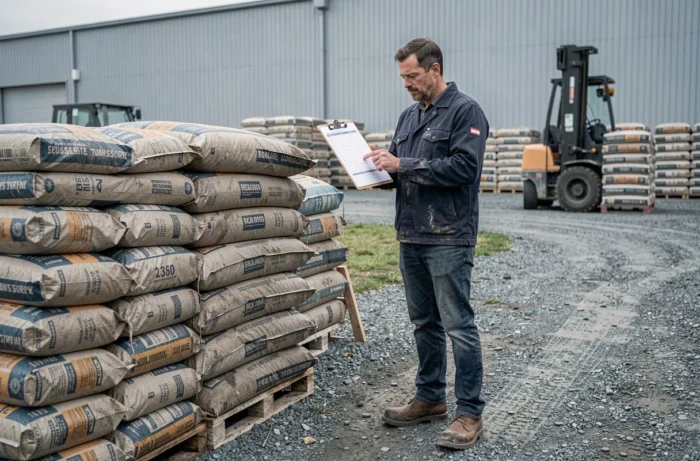
The water jar test: fill a transparent jar one-third with a soil sample, add water, shake vigorously, and then let it settle for several hours. The layers that form reveal the proportion of sand (bottom), silt (middle), and clay (surface). A balanced topsoil for a vegetable garden shows relatively proportionate layers, without an overwhelming dominance of sand or clay.
The touch completes the diagnosis. Take a moist handful and squeeze it: if it forms a compact ball that does not break apart, the soil is too clayey. If it crumbles immediately, it lacks binding. A good topsoil forms a ball that cracks when you gently press with your thumb.
Smell also matters. Healthy soil smells like underbrush or earth after rain. A sour or sulfurous smell indicates prolonged anaerobiosis, often linked to excessive pile storage or poorly composted organic contamination.
Screened or Amended Topsoil: Choosing Based on Existing Soil
The common reflex is to choose the “richest” soil possible. This is a mistake when the existing soil already has its own characteristics. The addition of topsoil should correct an imbalance, not create a new one.
- On heavy clay soil, a screened topsoil with a sandy component improves drainage and prevents root asphyxiation in the vegetable garden.
- On sandy, filtering soil, an amended soil rich in compost and organic matter retains water and nutrients where plants need them.
- On almost inert fill land, an amended soil in a sufficient layer (at least the target rooting depth) reconstructs a fertile horizon for the lawn or plantings.
The necessary volume is calculated simply: surface area in square meters multiplied by the desired thickness. For turfing, a few centimeters are sufficient. For a vegetable garden, you aim for the working depth of the soil, which is often more substantial. Planning for a compaction coefficient remains prudent, as bulk soil loses volume once spread and watered.
Bulk Delivery or Big Bag: Logistical Constraints and Pitfalls to Avoid
The choice of packaging depends less on the budget than on access to the site. A dump truck delivering in bulk needs a sufficiently wide passage and a drop-off point close to the work area. If the truck cannot enter, the soil remains at the roadside, and you have to wheelbarrow it, turning an afternoon into several days of work.
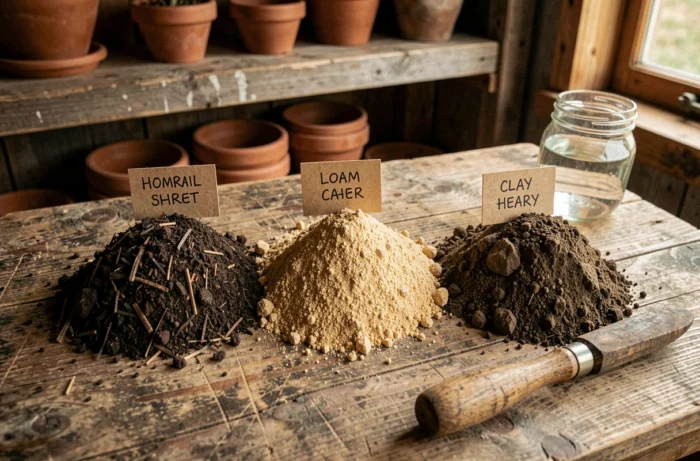
The big bag (about one cubic meter per bag) offers more placement flexibility, but the cost per cubic meter is higher than in bulk. For small gardens or difficult access, it is often the only realistic option.
A few points of vigilance upon receipt:
- Check that the delivered volume matches the order. A pile of bulk soil is difficult to measure by eye, hence the importance of knowing the truck’s dimensions and capacity.
- Visually inspect the soil: presence of debris (plastics, metal scraps, pieces of concrete) that betray poorly sorted construction soil.
- Request a delivery note mentioning the origin, type of screening, and compliance with the NF U44-551 standard.
- Spread and work the soil quickly after delivery. Prolonged storage in piles encourages anaerobiosis and degrades the biological structure of the soil.
Microplastics and Water Retainers: An Emerging Criterion for Topsoil
Some suppliers incorporate water retainers or wetting agents into their mixes to improve water retention. These polymer-based additives pose an increasing problem. European regulations on fertilizing products are evolving towards a gradual restriction of intentionally added microplastics.
For an organic vegetable garden or a garden where vegetables are grown, it is better to prioritize topsoil without synthetic additives. Water retention improves naturally with a good compost rate and surface mulching. Feedback varies on the actual effectiveness of these retainers in garden soils, but the precautionary principle encourages avoiding them when producing plants intended for consumption.
Before signing a quote, the question to ask the supplier is simple: does the soil contain added polymers or retainers? If the answer is vague, moving on to the next supplier remains the best option.